
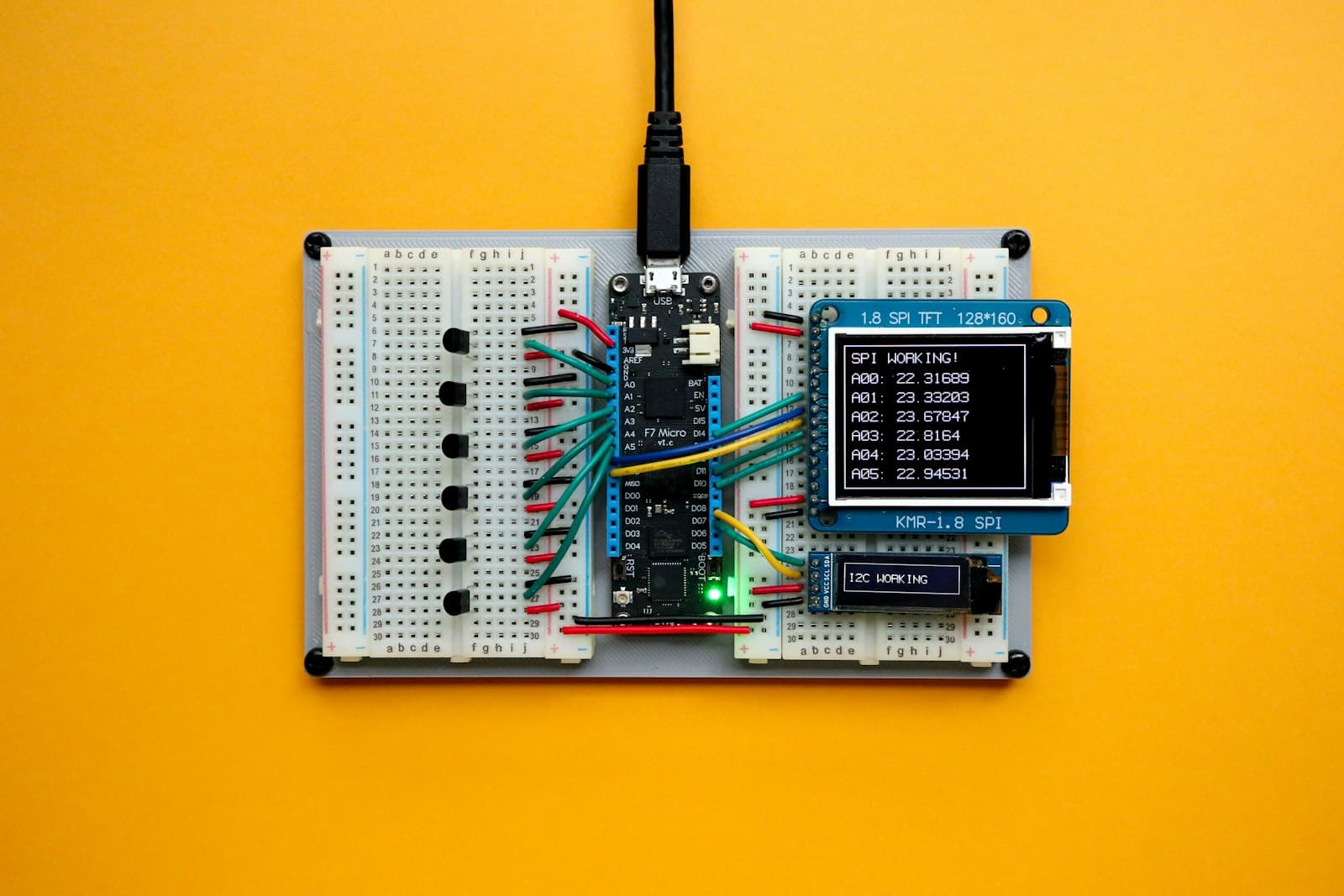
Every ECE student hits the same wall in third year: pick a project topic, submit it, present it to an evaluator, get a grade, move on. Almost nobody stops to ask whether that project will actually help them get hired.
That's the gap. If you're searching for the right ECE project for placement, you're already ahead of most of your batch — because the truth is, the majority of ECE final-year projects are built for a rubric, not for a recruiter. They optimize for "does this satisfy the syllabus" instead of "does this prove I can do the job."
Kavya, a third-year ECE student from Coimbatore, spent six weeks building a driver drowsiness detection system for her mini-project — camera module, embedded C, a buzzer alert, the works. It earned her a 9/10 from her evaluator. Six months later, in a placement interview for an embedded systems role, the interviewer asked her one question about it: "what happened when the camera lost the driver's face in low light?" She hadn't tested for that. The project was excellent by rubric standards and unprepared for a recruiter's follow-up.
This guide walks through what actually makes a project placement-worthy, which project categories give you the best return on effort, and how to present the work so it lands the interview instead of just the internal grade.
The Real Problem: ECE Students Are Stuck Between Two Worlds
If you're in ECE, you already know the tension. Some of your batch is chasing core electronics roles — VLSI, embedded systems, telecom, semiconductor design. A larger chunk is chasing IT and software roles, because that's where the bulk of campus hiring volume is. And a lot of students genuinely don't know which side they belong on until placement season is already underway.
This is where a huge amount of anxiety comes from. ECE students often feel like they have to choose a lane in advance and hope it pays off, without a clear way to test where their strengths actually fit. AI career tools like Sklor are increasingly helping ECE students resolve exactly this tension — mapping a single project against both core and software role requirements so students don't have to guess which lane to prepare for.
The good news: a well-built project doesn't force you into one lane. Done right, it can demonstrate hardware skills and the programming/data skills that IT recruiters screen for — meaning the same project can open doors on both sides, as long as you know how to frame it for each audience. More on that later.
What Recruiters Are Actually Looking For (Not What You Think)
Recruiters — whether from a semiconductor company, an electronics manufacturer, or a software firm hiring ECE grads for embedded or IoT roles — are not reading your project report line by line. In an interview, they're using your project as a proxy to answer three questions fast:
Can this person actually build something, or did they just assemble a kit from a YouTube tutorial?
Can they explain a technical decision, not just describe an outcome?
Did they hit a real problem, and how did they solve it?
That's it. A recruiter at a core electronics company will ask "why did you choose this microcontroller over that one" faster than they'll ask you to explain your circuit diagram. A recruiter for a software-adjacent embedded role will care more about whether your code is on GitHub and readable than whether your PCB looks polished.
This is why ECE placement projects that succeed all share one trait: they were built to survive a follow-up question, not just a demo.
Best Project Categories for ECE Students Aiming for Placement
Not all project types carry equal weight with recruiters. Below are the four categories that consistently perform best — because each one maps directly to a skill set that's actively being hired for right now.
1. IoT Projects
IoT project for placement searches spike every placement season for good reason — IoT sits at the intersection of hardware and software, which means it's relevant to both core and IT-adjacent interviews.
Example: A smart home automation system using ESP32, sensors for temperature/motion/light, and a cloud dashboard (Firebase, AWS IoT, or ThingSpeak) for remote monitoring and control.
What this proves to a recruiter:
Microcontroller programming and interfacing with sensors
Understanding of communication protocols (MQTT, HTTP, Wi-Fi/Bluetooth)
Basic cloud integration and data handling
End-to-end system thinking — hardware talking to software talking to a user interface
How to make it stand out: Don't stop at "sensor reads value, dashboard shows value." Add a real constraint — optimize for battery life, add offline data logging with sync-when-connected, or build in a failure mode (what happens if the Wi-Fi drops mid-transmission?). That's the difference between a tutorial clone and a project with engineering judgment behind it.
If you're starting late: With less than 8 weeks before interviews start, IoT and Embedded C projects are the most realistic to execute well in that window — VLSI and signal processing projects with genuine depth typically need more runway.
2. VLSI / Digital Design Projects
If you're aiming at semiconductor companies or chip design roles, a VLSI project is the single strongest signal you can put on a resume, because so few students actually attempt one seriously.
Example: RTL design and simulation of a low-power ALU or a UART controller using Verilog, synthesized and verified on an FPGA board.
What this proves:
RTL coding ability (Verilog/VHDL)
Understanding of synthesis, timing, and verification — not just simulation
Comfort with tools like Xilinx Vivado, ModelSim, or Cadence (even student versions)
How to make it stand out: Push past simulation-only results. Getting your design running on actual FPGA hardware, and being able to talk about timing constraints or power trade-offs you hit along the way, puts you ahead of nearly every other VLSI-project resume line an interviewer will see that season.
3. Embedded C Projects with a Working Circuit
This is the classic core-ECE project, and it still carries serious weight — as long as it's a working physical build, not just code.
Example: A driver drowsiness detection system using a camera module, embedded C on a microcontroller, and a physical alert mechanism (buzzer/vibration motor).
What this proves:
Embedded C programming, register-level thinking, real-time constraints
Interfacing hardware components (sensors, actuators, displays) with a controller
Debugging skills at the hardware-software boundary — the exact skill embedded roles screen for
How to make it stand out: Document a failure you hit with timing, power draw, or sensor noise, and how you fixed it. This is almost always the first follow-up question in an embedded systems interview, so if you've already got the story ready, you'll sound like someone who's done real engineering, not just followed a wiring diagram.
4. Signal Processing Projects
Less common, which is exactly why it's a strong differentiator if you're targeting telecom or signal-processing-adjacent roles.
Example: A simulation-based project on noise filtering or basic modulation/demodulation techniques (e.g., a digital filter design or a simplified 5G channel simulation), implemented in MATLAB or Python.
What this proves:
Applied understanding of DSP concepts, not just theory
Ability to implement mathematical models in code
Analytical thinking — this category is closer to research work, which some employers specifically value
How to make it stand out: Add a comparison — implement two filtering approaches and quantitatively compare their performance (SNR improvement, computation time, accuracy). A single number like "improved SNR by 6dB" makes your project memorable in a stack of generic submissions.
The Skills Recruiters Are Actually Scanning For
Across all four categories, here's the skill vocabulary that recruiters and their resume filters are looking for. If your project touches these, make sure they're explicitly named on your resume and in your project summary — not left implied:
Verilog / VHDL — RTL design, digital logic
Embedded C — microcontroller programming, real-time systems
MATLAB — signal processing, modeling, simulation
PCB design — Eagle, KiCad, Altium — shows you can go from schematic to physical board
Arduino / Raspberry Pi — rapid prototyping, sensor interfacing
IoT protocols — MQTT, HTTP, Zigbee, Bluetooth Low Energy, Wi-Fi
You don't need all six. You need two or three, demonstrated deeply, rather than six mentioned shallowly.
Before and After: How the Same Project Reads on a Resume
Here's what separates a project that gets skipped over from one that gets a callback.
Before (typical resume line):
IoT-based home automation system — Built a system to control home appliances using sensors and a mobile app.
This tells a recruiter almost nothing. No tools, no outcome, no proof of depth.
After (rewritten for placement):
Smart Home Automation System (IoT) — Designed and built an ESP32-based automation system integrating temperature, motion, and light sensors with MQTT-based cloud communication (AWS IoT); implemented offline data buffering to handle intermittent Wi-Fi, reducing data loss by ~90% in testing. Full code and circuit diagrams on GitHub.
Notice what changed: specific technologies named, a real engineering problem solved (data loss during connectivity drops), a quantified result, and a pointer to evidence (GitHub). This version survives a follow-up question. The first one doesn't.
Positioning Your Project for Core vs. Software Roles
This is where most ECE students leave value on the table. The same project can be framed two different ways depending on who's reading it:
For a core/hardware interviewer: Lead with the circuit, the component choices, the protocol-level details, and any hardware debugging you did.
For a software/IT interviewer: Lead with the code architecture, the cloud/data pipeline, and any programming logic — sensor calibration algorithms, data processing, or the app/dashboard layer.
You're not lying in either version — you're choosing which true part of the story to lead with. This single adjustment is often the difference between a project that only works for core-company interviews and one that keeps both paths open.
Frequently Asked Questions
I'm not sure if I want core or IT roles. Does that change what project I should build?
Not as much as you'd think. IoT and embedded projects sit naturally between both — they involve hardware but also require real programming. Build one of those, and you keep both doors open longer, which reduces the pressure to decide too early.
Is a simulation-only project (no physical hardware) still worth doing?
Yes, especially for VLSI or signal processing, where physical builds aren't always feasible. What matters more is depth — verified results, documented trade-offs, and a working demo, even if it's entirely in software.
Should I do a group project or a solo project?
Either works, but be ready to clearly explain your specific contribution. Interviewers will ask "what part did you build," and a vague answer here hurts more than the project topic itself.
How early should I start if I want this project to help with placements?
Ideally 4–6 months before placement season starts, so you have time to build, debug, document, and — critically — practice explaining it out loud before you're doing it live in an interview.
What is the best ECE mini project for placement in final year?
There's no single "best" project — it depends on which direction you're leaning. IoT projects give the most flexibility across core and IT roles. VLSI projects are the strongest signal for semiconductor companies specifically. The right choice is the one that maps to the roles you're actually planning to apply for.
Do I need a working hardware prototype, or is a simulation enough?
For IoT and Embedded C projects, a working physical build is expected and significantly strengthens your interview story. For VLSI and signal processing, a well-verified simulation with documented results is genuinely acceptable — recruiters in these areas understand that physical fabrication isn't always feasible at the student level.
Which ECE project is best for getting into a software company?
IoT projects with a meaningful cloud/software layer are your strongest bet — they let you lead with code architecture, data pipelines, and app logic in an interview, while still being technically an ECE project. A signal processing project implemented entirely in Python or MATLAB can also work well if the software company values analytical thinking.
What tools should I learn for an ECE placement project — Verilog, MATLAB, or Embedded C?
It depends entirely on your target direction. Embedded C is the most broadly useful if you're unsure — it applies to IoT, embedded systems, and most hardware-adjacent software roles. Verilog matters specifically if you're targeting VLSI or chip design. MATLAB matters if you're leaning toward signal processing or telecom roles. Pick based on the category you're building in, not all three at once.
Can I use a project from GitHub or online tutorials for ECE placement?
You can use one as a starting point, but recruiters can usually tell when a project hasn't been genuinely understood or extended. If you start from a tutorial, add a real constraint or feature the original didn't have, and be ready to explain every design decision — including ones you changed from the original. That's the difference between "I copied this" and "I built this."
How do I explain a VLSI or signal processing project if the interviewer isn't from a core background?
Focus on the problem you solved and the trade-offs you made, rather than deep technical jargon. For a VLSI project, talk about what the circuit does and why certain design choices mattered (power, speed, area) rather than walking through RTL code line by line. For signal processing, lead with the real-world problem (noise, interference, signal loss) and the measurable improvement you achieved, saving the mathematical detail for follow-up questions.
How Sklor Helps You Get There
Building the project is only half the job. The other half — figuring out which project actually maps to the roles you're eligible for, and how to present it so it works for both core and software interviews — is where most students get stuck without guidance.
Sklor maps your project and skill set against real ECE role requirements, on both the core engineering side and the software/IT side, so you're not guessing which resume framing to use or which roles to even apply for. Instead of treating "core vs. IT" as a decision you have to make blind, Sklor shows you where your specific project and skills already fit — so you can walk into placement season with a clear plan instead of anxiety.
Kavya ran her drowsiness detection project through Sklor and found it qualified her for both embedded systems roles and IoT-adjacent software roles — she just needed to lead with different parts of the story for each.
Try it free at sklor.com — describe your project and target roles, and get a personalised breakdown of where you fit on both sides of the core/IT divide in under 60 seconds.
Related reading: How to Get a Job from Your College Project for the general framework this article builds on, and our guide on managing placement season anxiety for a broader look at navigating the process. You can also explore ECE-specific role breakdowns on the Sklor /explore page to see how different projects map to different job tracks.